Pomegranates
Sunday, August 13
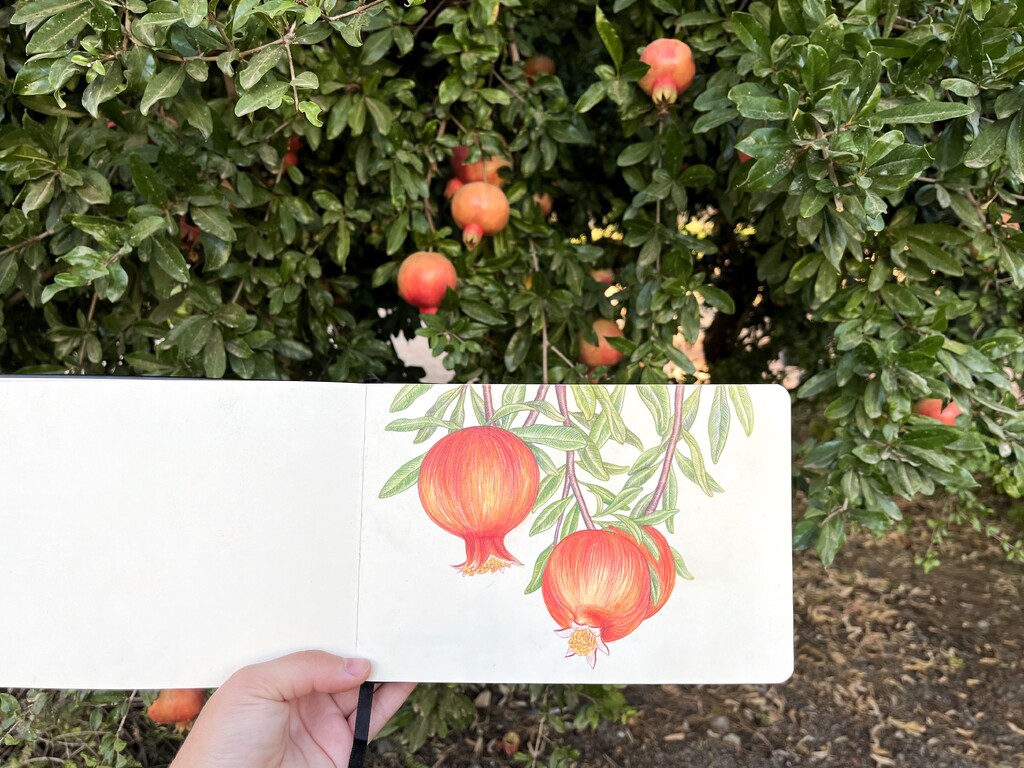
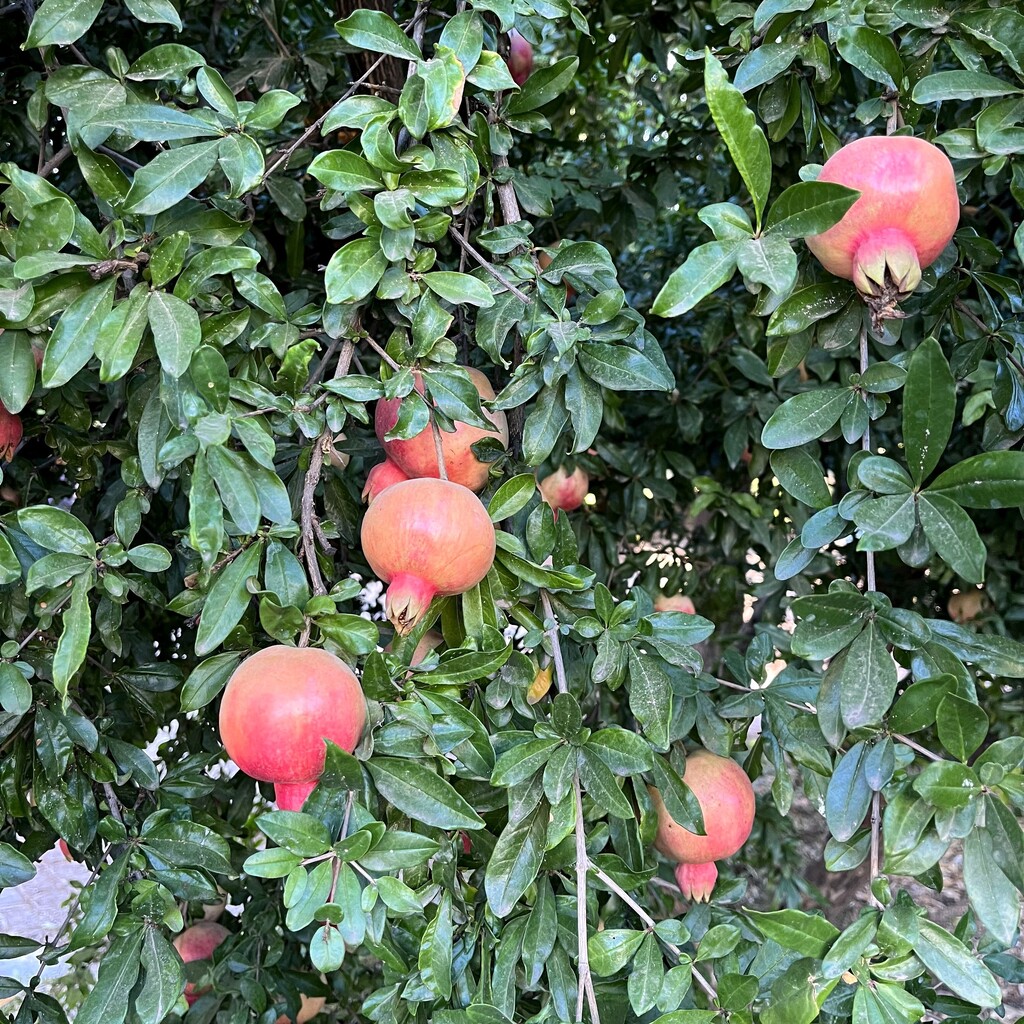

The city of Granada has around 230,000 inhabitants and is located in southern Spain in the Andalusia region. Andalusia is one of the sunniest regions in all of Spain and is also one of the hottest regions in the country.
The many hours of sunshine and warmth not only attract tourists, but also ensure that many plants and trees grow here in Andalusia that wouldn’t survive in Germany’s cold climate. For example, figs, mangoes and oranges are grown in many places in southern Spain.
However, to see these fruits and trees you don’t even have to travel to the plantations on the coast, just take a walk in one of the many public parks in the city of Granada. In addition to fig and orange trees, there are also a lot of pomegranate trees growing there, which are usually full of fruit.
The pomegranate has become the symbol of the city of Granada and is an important part of the city’s coat of arms. The Spanish word “Granada” also means “pomegranate,” although it is not known whether the city owes its name to the pomegranates that grow there. Nevertheless, the pomegranate also symbolizes the history of the city. In 711, Granada was conquered by the Moors – Berber tribes from North Africa who, among other things, brought pomegranates from North Africa to Spain. The influence of the Arab period can still be seen in Granada today. And pomegranate symbols can be found in many different places in the city, whether painted on houses, as decoration on Spanish ceramics or on the metal bollards in the city.